Cloud Storage: Data Backup
- 4.4
- Rating
- 1.00M
- Installs
- Free
- Price

 Analysis by App-foxy
I know the small panic that comes from needing a photo, document, or video on a different device and realizing it is still trapped on the old one. Cloud Storage: Data Backup is built around that recurring problem: moving important files into an online space so they are easier to reach and less dependent on one phone. After using it as a productivity tool, I found its main appeal less about adding complexity and more about removing a repeated chore from my day.
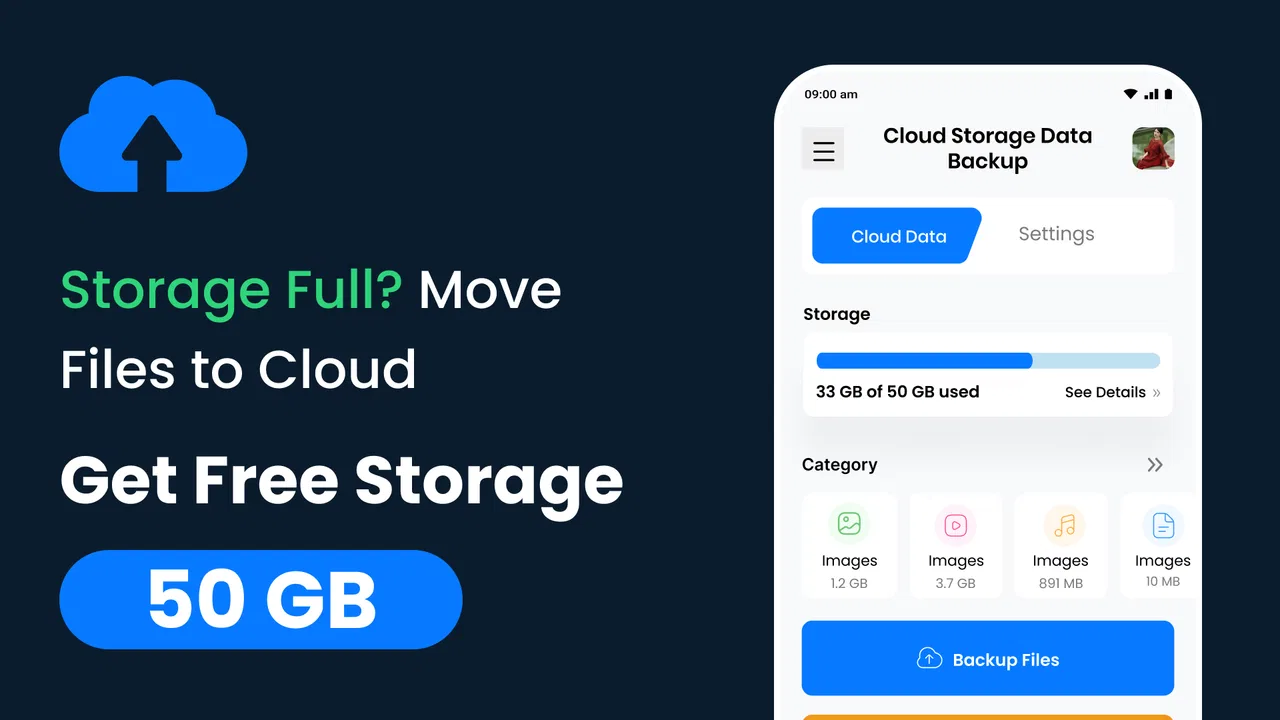
This is a free cloud-storage app from APPS GLOBAL Zone - FZCO, aimed at storing photos, videos, and other files securely in cloud space. It has a 4.4 average from around 5.5 thousand ratings and has passed one million installs, which gives it a useful level of public adoption without making it feel like an enormous, overloaded platform. The Everyone age rating also makes its audience broad, although the practical value depends much more on how much storage you need and how often you switch between devices.
Cloud Storage: Data Backup in everyday use
I find the everyday value of Cloud Storage: Data Backup comes down to whether it makes a file easier to retrieve, not simply whether it was uploaded. In this section, I’d focus on choosing a small, useful set of files and checking that they remain understandable when you need them later. That practical test leads naturally to the more important question of how thoughtfully to handle personal data.
You May Also Like

 Blood Strike: 2.5 Anniversary
Blood Strike’s Loadouts Turn Every Drop Into a Tactical Gamble
A close look at Blood Strike’s custom loadouts: how fast access to signature weapons reshapes its battle royale rhythm, rewards preparation, and narrows the gap between fights.

 Pandora - Music & Podcasts
Pandora’s Music Is Easy to Start, but Harder to Recover
Pandora’s strength is its low-effort path from a seed to a station. Its weak spot is how much confidence it asks you to place in connection, setup, and quiet recovery.

 8 Ball Pool
 Is Built on Rivalries, Rematches, and Routine
A close look at the rivalries, rematches, shared routines, and unanswered safety questions that turn a quick pool match into a persistent mobile community.

 Samsung Music
’s Quiet Strength Is Playing What You Already Own
Its reach comes less from spectacle than from dependable access to a personal library. That simplicity is both the app’s strongest retention engine and its ceiling.

 AccuWeather: Weather Radar
AccuWeather Review: A Quick, Clear Forecast for Everyday Decisions
For everyday plans, the best forecast is the one you can understand quickly. AccuWeather makes rain timing, radar, and local conditions easy to act on, with a few trade-offs.

 Hill Climb Racing
Why Hill Climb Racing Still Turns Crashes Into One More Run
A tiny car, a bumpy hill and one more upgrade: Hill Climb Racing keeps resurfacing because its simple chaos makes every near-miss feel personal.
More From Our News Desk



The recurring problem it solves
The real reason to use a backup app is rarely excitement. It is usually the moment when a phone is full, a device is being replaced, or a file is needed away from home. Manually sending images to yourself, copying folders with a cable, or searching through messaging conversations all work in small doses, but they become irritating when repeated every week.
Cloud Storage: Data Backup gives those files a separate place to live. That separation matters. If everything remains only in the phone’s local storage, deleting an item to free space can feel risky. If a work document is kept only on a laptop, opening it from a tablet or another phone becomes inconvenient. A cloud-based backup app turns those situations into a simpler retrieval task: open the service, locate the item, and continue.
I would describe it as a practical utility rather than a complete digital workspace. It is most useful when your priority is access and safekeeping for personal files, not advanced collaboration, document editing, or a large collection of office tools. That distinction is important because the familiar alternatives in this category often try to do much more than storage. More features can be helpful, but they can also make a straightforward backup job feel unnecessarily busy.
Getting to the first useful backup
The first setup should be approached with a little planning instead of treating it as a button-pressing exercise. Before sending everything into the cloud, I would decide which files genuinely deserve a second copy. Family photos, essential videos, scans, travel documents, and files that would be difficult to recreate are sensible starting points. Temporary downloads and duplicate images are less valuable and can consume space without improving your protection.
A useful workflow is to begin with one clearly defined group rather than selecting the entire phone immediately. For example, I would start with recent camera photos, check that they appear correctly in the cloud, and then move on to older folders. This makes it easier to notice a problem early and avoids turning the first backup into a long, confusing wait. It also gives you a cleaner collection to search later.
The app’s current version is 1.2.00, and it runs on Android 7.0 or later. That broad compatibility is helpful if you are keeping an older phone as a secondary device or using a budget handset that does not receive the newest Android releases. Still, compatibility should not be confused with identical performance on every device. Older hardware, a crowded local storage area, or an unstable connection can make any cloud transfer feel slower and less predictable.
I also recommend treating the first upload as a housekeeping opportunity. Rename vague files when they matter, remove obvious duplicates, and separate personal records from casual media. Cloud storage is much more useful when the contents are understandable months later. The app can give you a place to keep files, but it cannot decide which copy is the correct one or create a sensible filing system for you.
How it fits into ordinary routines
One realistic scenario is a family weekend away. I might take a large number of photos and short videos, then discover that my phone is nearly full before the journey home. Instead of deleting memories immediately or waiting until I return to sort everything, I can use the cloud as a holding area for the files I want to preserve. Later, I can review them with a larger screen and keep only the best versions locally.
Another scenario is changing phones. The most frustrating part of a device upgrade is often not installing apps; it is remembering where personal files ended up. A dedicated cloud location reduces the number of places I need to check. That does not eliminate every transfer step, but it can make the move less dependent on the old phone remaining perfectly organized.
Students and freelancers can also use it for a simple separation between active work and local clutter. A project folder, scanned notes, or reference images can be kept available without filling the device with every version forever. I would still keep a second copy of irreplaceable work somewhere else, because one cloud service should not be treated as the only possible safety net.
For people who share devices, the benefit is more about continuity than collaboration. A file stored in the cloud can remain available when the primary phone is unavailable, but that does not automatically make the app a shared team drive. If several people need to edit the same document, track revisions, assign tasks, or discuss changes inside the file, a collaboration-focused service is likely to be a better fit.
Small habits that save time later
The first non-obvious habit I would adopt is a monthly cleanup rather than waiting until storage becomes a problem. Backup apps are good at preserving material, but preservation can quietly become accumulation. A short review of duplicate videos, blurry photos, and abandoned downloads keeps the cloud useful and makes future searches faster.
The second is to use a two-stage backup routine for important records. I would place the working copy in Cloud Storage: Data Backup, then keep a separate offline or alternative copy of the documents that would cause serious trouble if lost. This is especially sensible for identity records, financial paperwork, or a project that cannot be recreated. Cloud access is convenient, but convenience is not the same thing as complete disaster protection.
The third is to organize by purpose instead of relying only on upload order. Folders such as “travel,” “receipts,” “school,” or “current projects” are more useful than a single stream of files. This matters most when the app becomes a long-term archive. A backup that cannot be navigated easily still saves files, but it does not save much time when you urgently need one.
A fourth practical tip is to avoid using the service as a dumping ground for every temporary item. Screenshots, forwarded images, and repeated downloads can make the important material harder to find. I prefer to back up deliberately, then clear the local originals only after checking that the cloud copy is present and usable. That extra check takes a moment and is worth it when the file matters.
Where the friction is reduced
The strongest part of the experience is the reduction in repeated file handling. Instead of remembering a cable, finding a spare computer, or sending attachments through another service, I can centralize the files that I expect to need again. That is a modest improvement on paper, but it adds up when the same task appears several times during a busy week.
It is also useful for reducing the anxiety around local storage. Phones often become crowded gradually, with photos and videos responsible for much of the pressure. Moving selected material into cloud space gives me a way to reclaim room without making an immediate decision to erase everything. The important word is selected: I would not remove local copies blindly, especially before checking that the upload completed properly.
Compared with a basic file-transfer tool, the cloud approach is more convenient when the destination device changes. Compared with a full office platform, it is more focused and potentially easier to understand for someone who only wants a place for personal files. The trade-off is that a simpler storage utility may not offer the same depth of editing, sharing, search, synchronization controls, or teamwork features that users expect from larger ecosystems.
That comparison also explains who should skip it. If you already have a well-organized cloud service built into your phone, computer, email account, and work routine, adding another storage location may create more confusion than value. You could end up wondering which service contains the newest copy. The app makes more sense for someone who wants a separate storage option, needs an uncomplicated backup destination, or is trying to reduce dependence on local phone memory.
Cost, capacity, and practical expectations
The app is free to install and use as a basic product, but it also includes in-app purchases ranging from $1.49 to $169.99 per item. I would pay close attention to the storage level and billing details shown inside the app before committing to anything. The broad price range means that different purchase options can represent very different levels of access, so it is better to decide based on your actual file habits than on the lowest visible entry point.
A light user who mainly wants a secondary home for selected photos may have a very different experience from someone trying to preserve years of high-resolution video. Video is particularly demanding because a small number of clips can occupy much more space than ordinary documents. If your library is large, compare the long-term cost and management tools with the cloud service you already use before moving everything.
There is also a reliability trade-off that applies to every online storage app. Access depends on having a usable connection when you need files that are not stored locally. For travel, poor reception, or urgent work, I would keep essential items on the device as well. Cloud Storage: Data Backup can reduce the risk of losing a local file, but it should not encourage you to remove every offline copy you might need.
Privacy-minded use and sensible boundaries
Because the app is designed for personal photos, videos, and files, I would think carefully before uploading highly sensitive material. The word “securely” in a storage description is reassuring, but responsible use still means choosing what belongs online, using a strong account password, and avoiding unnecessary copies of confidential documents. The app is a tool for storage, not a substitute for personal security habits.
I would also separate convenience from archival certainty. A file being visible in a cloud account is a good sign, but important users should occasionally open a selection of older files and confirm that the archive remains useful. This is especially relevant for videos and documents that you may not access often. A backup plan is only valuable when retrieval works at the moment it is needed.
For everyday photos and ordinary documents, that level of checking can be occasional rather than burdensome. For professional records or irreplaceable family material, I would use a second destination as well. This is not a criticism unique to this app; it is the sensible boundary of relying on one online location for everything.
Who will get the most from it
Cloud Storage: Data Backup is a good match for Android users who want a straightforward place to keep selected files away from their phone. It is especially appealing if you regularly run out of local space, move between devices, or dislike transferring photos manually. The broad Android compatibility also makes it worth considering for users who are not on a recent handset.
It can suit a parent preserving family media, a student keeping scans and project materials, or a traveler who wants a separate copy of recent photos. In each case, the value comes from reducing small points of friction: fewer cables, fewer self-sent attachments, and less hesitation before clearing local storage.
I would be more cautious for teams, photographers with very large libraries, and anyone who needs sophisticated file versioning or deep collaboration. Those users should compare the app with services designed around shared editing, automatic device synchronization, or professional media management. A focused backup utility can be easier to live with, but it may not replace a complete productivity ecosystem.
Final judgment after using it as a utility
My overall view is that Cloud Storage: Data Backup succeeds when the goal is simple: keep useful files in a separate cloud location and make them easier to reach later. It does not need to become the center of your digital life to be worthwhile. Its best contribution is the time saved when a file is needed on another device or when local storage starts becoming a daily nuisance.
The app is not a magic answer to every backup concern. You still need to organize what you upload, confirm important files are actually available, and keep another copy of truly irreplaceable material. You should also think about whether adding a separate service will complicate an ecosystem you already understand. Those limitations are manageable, but ignoring them can turn convenience into clutter.
With those expectations in place, I would recommend it to someone who wants an accessible productivity app for personal cloud storage without immediately committing to a larger suite of tools. APPS GLOBAL Zone - FZCO has positioned it as a practical file-preservation option, and the combination of a free starting point, an Everyone rating, and a substantial install base makes it approachable. The real benefit is not storing more files; it is spending less time worrying about where the files are.
If your recurring problem is a crowded phone, an inconvenient device switch, or photos scattered across several places, this app is worth trying. If your priority is advanced teamwork, professional-grade media organization, or a single all-in-one platform, another option may serve you better. For ordinary personal backups, though, I found its focused purpose easy to understand and genuinely useful.
FAQs for Cloud Storage: Data Backup
01What is Cloud Storage: Data Backup used for?
Cloud Storage: Data Backup is designed to help you save important files, photos, videos, contacts, and other personal data online. Instead of keeping everything only on your phone, the app can provide an additional backup location that may be accessed when changing devices or recovering from accidental deletion. Its usefulness depends on the supported file types, available storage, and the backup options offered in the current version.
02Is Cloud Storage: Data Backup free to use?
The app may offer free access with limitations, such as a restricted amount of cloud storage, fewer backup features, advertisements, or optional premium plans. Before uploading a large amount of data, check the pricing page and subscription terms inside the app. Pay particular attention to whether billing renews automatically, what happens after cancellation, and whether your files remain available when a free trial or paid period ends.
03Is my data secure when I use Cloud Storage: Data Backup?
Cloud backup can protect your files from phone loss, damage, or accidental deletion, but security depends on the provider’s infrastructure and privacy practices. Review the app’s privacy policy to understand how information is collected, stored, and shared. Use a strong, unique password and enable any available account protection, because cloud storage should supplement—not replace—careful management of sensitive personal or financial documents.
04Can I back up and restore data on both Android and iPhone?
Compatibility depends on the version of Cloud Storage: Data Backup and the permissions supported by your device. Photos, videos, and documents are usually easier to transfer between platforms than application data, messages, or system settings. Before relying on the service during a phone upgrade, confirm that the app supports both operating systems and test restoring a few files so you know exactly what can be recovered.
05What permissions and internet connection does the app require?
A backup application commonly requests access to photos, files, contacts, or other selected content so it can upload the information you choose. It also needs an internet connection, and large backups may use considerable mobile data, battery, and storage for temporary files. For safer and more predictable uploads, review permissions carefully and configure automatic backups to run over Wi-Fi if that option is available.
Pros
- Automatic backup helps protect photos
- videos
- and important files.
- Files can be accessed from multiple devices with an internet connection.
- Simple interface makes uploading and organizing backups easy.
- Cloud storage reduces the risk of losing data after device damage or theft.
- Useful sharing options make it easy to send stored files to others.
Cons
- Free storage space may be limited for users with large backups.
- Uploading many files can consume mobile data and take considerable time.
- Some advanced backup features may require a paid subscription.
- Restoring large amounts of data depends heavily on connection speed.
- Privacy may concern users who prefer keeping files only on local storage.

Cloud Storage: Data Backup
Gallery